Welcome to Foundation School
To nurture our youngest learners, to kindle their curiosity, to bring out their bravery, to grow their hearts, minds, and bodies with frequent outdoor play, to scaffold social learning with emotional intelligence, and to instill in children Jewish values and love for community as a source of safety, success, and well-being.
Our Mission
Quality Jewish Early Childhood Education for all children
Our Vision
A community that cares for one another, supports each other, and provides space for learning, for growth, and for joy. A community where children know their voices matter, that they have agency and choice in the world, and that they are infinitely capable.
We foster a warm, inclusive environment where families, educators, and children grow together, inspired by nature and tradition. We see our students as infinitely capable, and, as such, our teachers collaborate with students to create meaningful and relevant curriculum that inspires the particular group of learners in each classroom community. We believe it is our task to teach our students to be able citizens of our community who have the skills to be independent learners, kind friends, and advocates for themselves as they gain readiness for kindergarten and the world beyond.
Our Values
We are guided by ancient Jewish values that have sustained our ancestors and brought us to this place at this time, values like chinuch, kavod, kehillah, kedusha, and m'sorah.
Chinuch (education): Education has been an emphasis in Jewish culture, jurisprudence, tradition, and history for thousands of years. For Jews, education is the foundation of any well-functioning society, and our communities invest accordingly. Strong Jewish community begins with a foundational early childhood education: exposure to the cycle of Jewish time with Shabbat, Havdalah, and holiday celebrations; teaching constructive social interactions through the lens of Jewish values; and exposure to Hebrew as the ancient language of our ancestors and the language of the only Jewish state in the world, Israel.
Kavod (respect): At Foundation School, we honor the wisdom inherent in young children, listening to their words and observing their play. We respect them for who they are today -- as human beings worthy of love and care -- and not just who they will become someday in the future. As we help them learn to be more independent, we teach them that they have choice and agency in the world and guide them to use it for good as much as they are able.
Kehillah (community): We understand that all of us are in community with one another whether we recognize it or not. We need each other, both in good times and hard times, and we all have something we can learn from each other. Recognizing the unique challenges that parents of young children are facing in times like these, we aim to meet families where they're at. Our experienced educators emphasize classroom community, as kids and families learn and grow together throughout the year. We bring parents and families in for holiday events, classroom activities like hamentaschen baking and latke making, Yom Hamishpacha (Family Day), and birthday celebrations. As the kids grow up in the school, they feel the warmth of community surrounding them and thrive within its embrace.
What is the Reggio Emilia Philosophy?
In its most basic form, Reggio Emilia is an educational philosophy focused on early childhood and primary education. It was developed in the Northern Italian community of Reggio Emilia by Loris Malaguzzi during the healing and rebuilding process following the Second World War. The philosophy is based on the fundamental principles of respect, responsibility, and community through exploration and discovery in a supportive and enriching environment.
Reggio philosophy is put into practice when teachers observe and record what children already know, are curious about, and what challenges them. Teachers then structure the environment to help children expand their academic and social potentials. They do so by encouraging curiosity, discovery, and meaningful learning in developmentally appropriate ways. Long-term projects connect core academic areas in and out of the classroom.
As a Reggio-inspired school, we have selected the following core Reggio components into our program at every level: inquiry and emergent curriculum, environment, and documentation.
Inquiry and Emergent Curriculum
Our experienced educators approach their work with curiosity -- What do my students already know and what questions do they have? What lights them up and how do they express their interests? What connections of inquiry are they building with the world around them as they learn and grow and scaffold their growing base of knowledge and wonder? Classroom and cohort curriculum unfolds based on the interests of the students and where their imaginations take them. In our Reggio-inspired learning environment, the process of learning takes precedence over any finished product that might emerge from that learning.
Environment as the Third Teacher
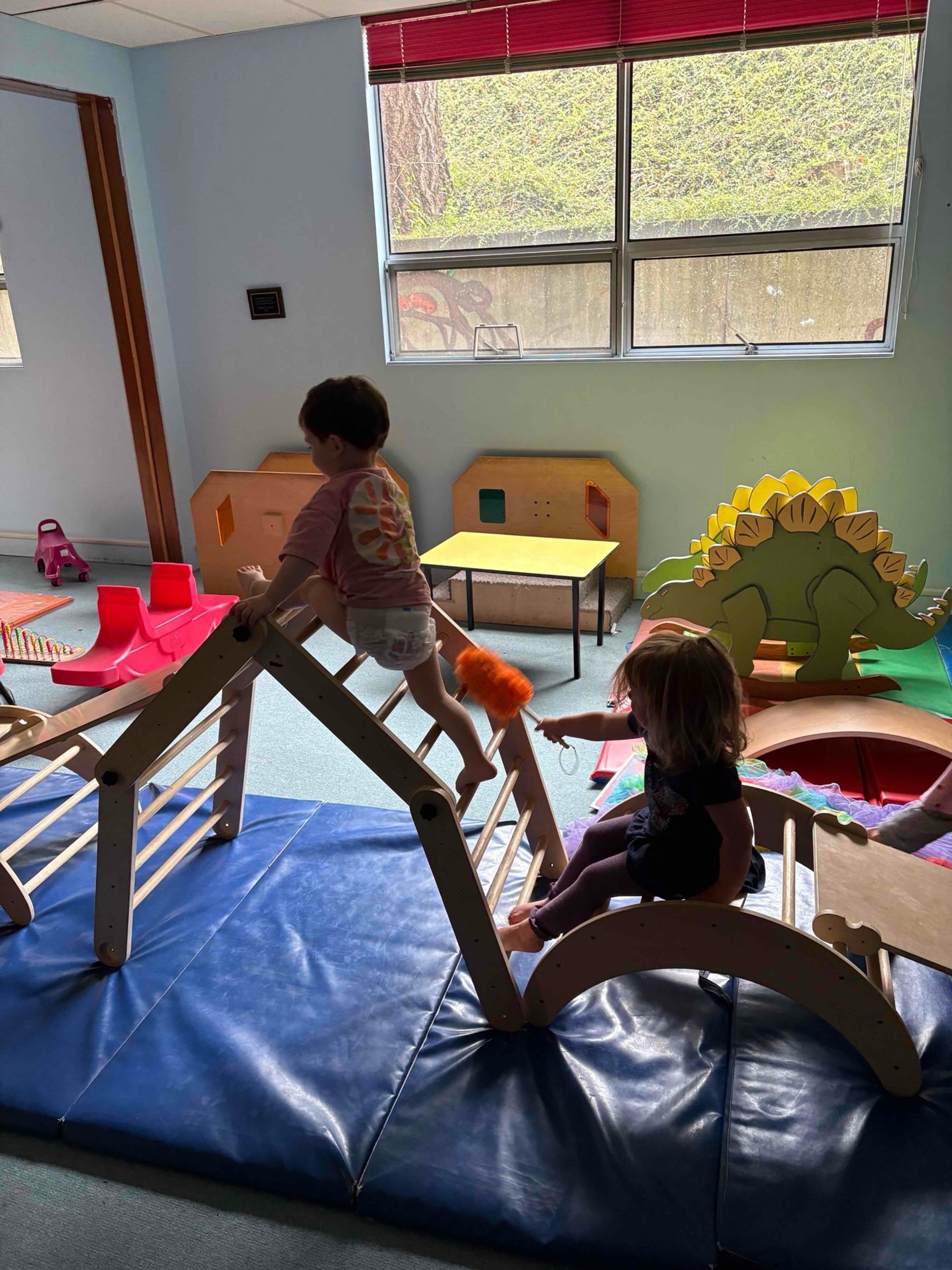
The environment in which children learn plays a huge role in their learning process and their ability to regulate their emotions and develop appropriate social connections with teachers and peers. We know that children see and appreciate beauty just as adults do, and we build our classroom environments from this premise. For example, we organize art materials by color as our youngest learners begin to recognize and name them. We mount and display artwork in a gallery style as our older learners explore what they are capable of. Environment can also help teach children independence and the Jewish value of kavod, respect. We put materials within their reach with the expectation that they will learn how to mindfully care for them, to take things out as needed and responsibly put them away when finished. We teach them and then trust them to care for their environment safely. Lastly, we emphasize natural materials and furniture wherever possible, natural light through open windows, and living plants within sight and tough to promote relaxation and regulation.
Documentation
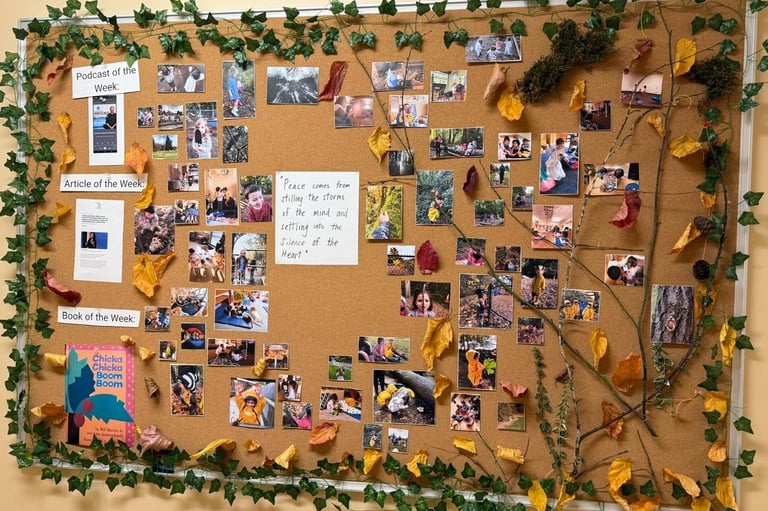
We take seriously both the work and the words of our students. Our teachers take time to document each child's process of learning at school and take photos of them engaged in activities. We record the words they use, and display the products of their learning process with great care. As we listen to their words, write them down, and display them for the whole community to see, they begin to understand that their words have power. This is a crucial building block in their development of both self-esteem and literacy.
Additionally, we believe that early childhood education is not only about the important experiences at school but also about the reflection of these experiences with family at home. We want parents to see the light-bulb moments each child is having at Foundation School, so they too can be a part of this meaningful process. Parents receive daily updates about what their children are learning at school to facilitate at-home discussion and discovery and to further strengthen the connection between home and school.
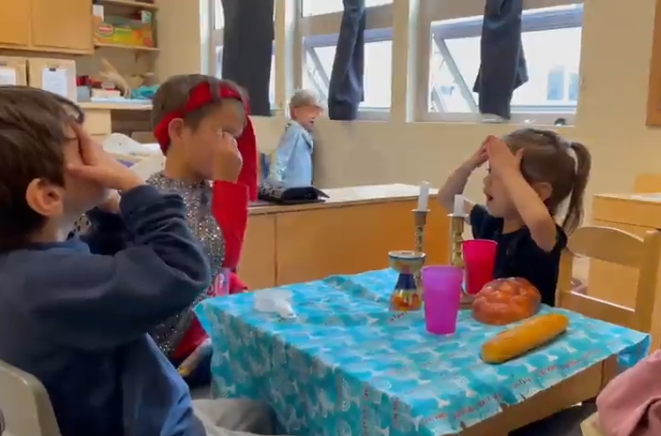
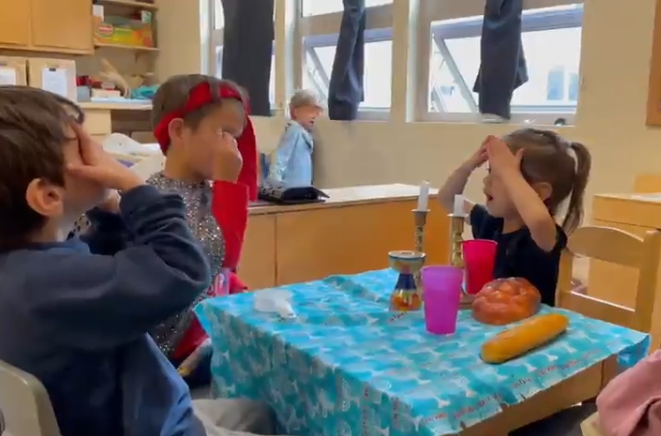
Kedusha (holiness,sanctification): The Jewish calendar of Shabbatot and chagim (the weekly Sabbath and seasonal holidays) provides the framework for how we feel the rhythm of time at Foundation School. We begin every week with havdalah, a farewell to Shabbat with good wishes for the week ahead. We gather together again as each week ends with a celebration of the most frequent special day in the Jewish calendar: Shabbat. We sing songs, light candles, and dance to Bim Bam/Shabbat Shalom. As each holiday approaches, we infuse classroom discussions with tales of our ancestors and their bravery, we introduce ritual objects and special foods to the children, and we gather together to celebrate, both as classrooms and many times, as a larger community. This is called kedusha, the sanctification of time.
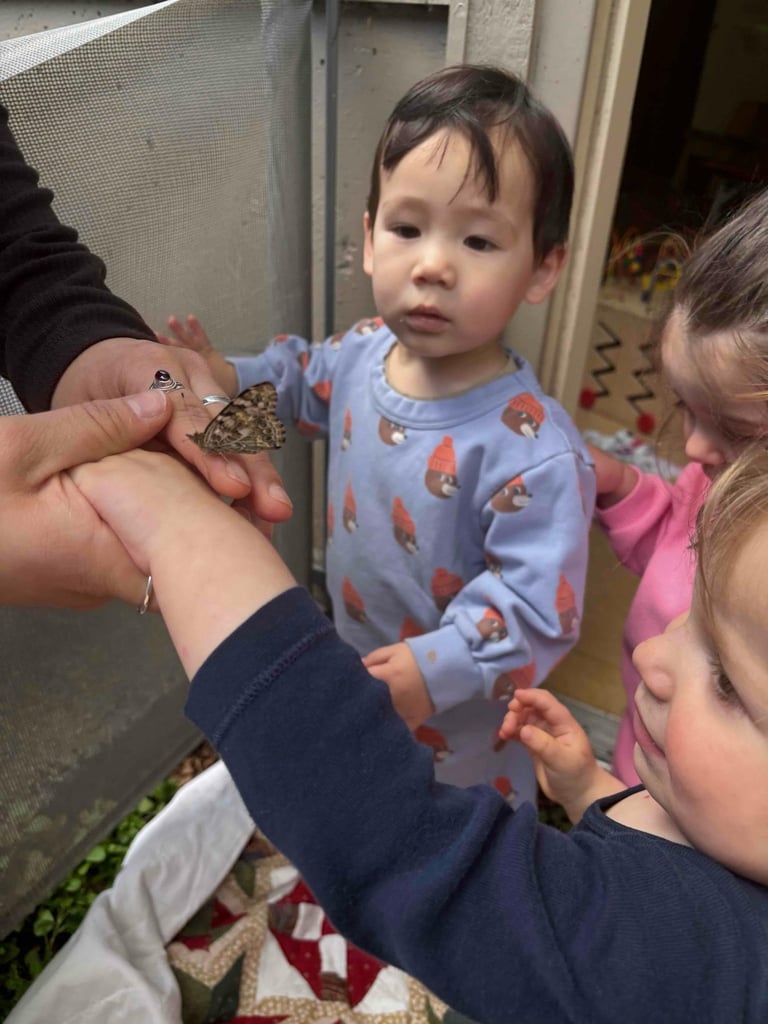
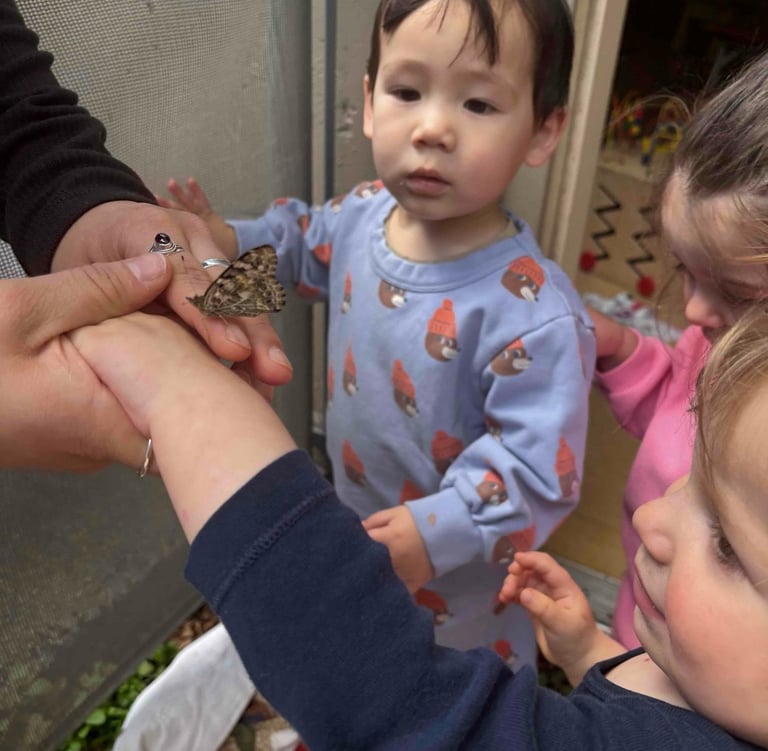
Mesorah (tradition): We recognize that we are part of an ever-flowing stream of wisdom, the wisdom of our ancestors. The tradition we have received from them infuses our daily lives and informs our identities as Jews living in 21st-century America. We see ourselves a links in the chain of mesorah, tradition, and just as our ancestors passed on received wisdom from those who came before them, so we have an obligation to pass the beauty of our culture on to the next generation. L'dor va'dor -- from generation to generation.
Get in Touch
Start your family's journey at Foundation School!
Contact Us
Candace Rothstein
crothstein@nevehshalom.org
503-293-7307
Director of Administration, Foundation School
Ronit Scheyer
rscheyer@nevehshalom.org
503-293-7302
Director of Early Childhood Education for Congregation Neveh Shalom
2900 SW Peaceful Lane
Portland, OR 97230
© 2026. All rights reserved.